


encouragement child development
Introduction: Nurturing Growth Beyond Praise
Every parent, educator, and caregiver strives to raise children who are confident, resilient, and ready to face the world’s challenges. In this journey, few tools are as powerful, yet often misunderstood, as encouragement. Far more than mere praise, genuine encouragement acts as the bedrock for a child’s healthy psychological and emotional development, fundamentally shaping their self-perception, motivation, and ability to thrive.
In a world quick to label outcomes as success or failure, understanding the nuanced impact of encouragement on children becomes paramount. It’s the silent force that propels a child forward after a setback, the quiet affirmation that fosters self-belief, and the consistent message that their effort, process, and intrinsic worth are valued above all else. This article delves deep into how encouragement in child development builds robust psychological foundations, offering practical strategies for parents and caregivers to harness its transformative power and truly unleash potential in every child. We will explore how encouragement differs from praise, its myriad benefits, actionable ways to integrate it into daily interactions, common pitfalls to avoid, and its lasting ripple effect into adulthood, demonstrating why it’s a cornerstone of positive parenting.
The Difference Between Praise and Encouragement
While often used interchangeably, praise and encouragement serve distinct purposes and yield different results. Understanding this distinction is crucial for effective child development strategies.
* Praise typically focuses on the outcome, the finished product, or a specific achievement. Phrases like “You’re so smart!” or “What a beautiful drawing!” are common examples. While praise can provide a temporary boost, its long-term effects can be counterproductive. Children may become dependent on external validation, fear failure (which might jeopardize future praise), or believe their worth is tied solely to their accomplishments or inherent traits rather than their effort. It often carries an evaluative tone.
* Encouragement, conversely, centers on effort, improvement, perseverance, and the process itself. It highlights a child’s actions, choices, and contributions, fostering an internal locus of control and intrinsic motivation. Examples include: “I noticed how hard you worked on that puzzle, even when it was tricky,” or “You stuck with that problem until you found a solution; that shows real determination.” Encouragement builds resilience, self-efficacy, and a genuine love for learning and growth, irrespective of the outcome. It’s descriptive and supportive, focusing on character and effort.
Why Encouragement Matters: Key Benefits for Kids
The profound impact of encouragement on child development is multifaceted, touching every aspect of a child’s growth. It cultivates a robust inner world, preparing them for a lifetime of learning and adaptation.
Building Self-Esteem and Confidence
Encouragement directly fuels a child’s sense of self-worth. When children are acknowledged for their efforts and resilience, they learn to trust their capabilities. This isn’t superficial confidence tied to external validation, but a deep-seated belief in their ability to try, learn, and grow. This authentic child self-esteem is vital for navigating social interactions, academic challenges, and personal growth. Encouraged children are more likely to take healthy risks, embrace new experiences, and feel secure in their identity.
Fostering a Growth Mindset
A growth mindset for kids is the belief that abilities and intelligence can be developed through dedication and hard work. Encouragement is its most potent fertilizer. By focusing on effort and strategy rather than innate talent, parents can instill the understanding that challenges are opportunities for growth. When a child hears, “You’re getting better at this because you keep practicing,” they learn the power of persistence. This perspective shift helps children view mistakes not as failures, but as valuable learning experiences, crucial for continuous development and successful parenting.
Developing Resilience and Perseverance
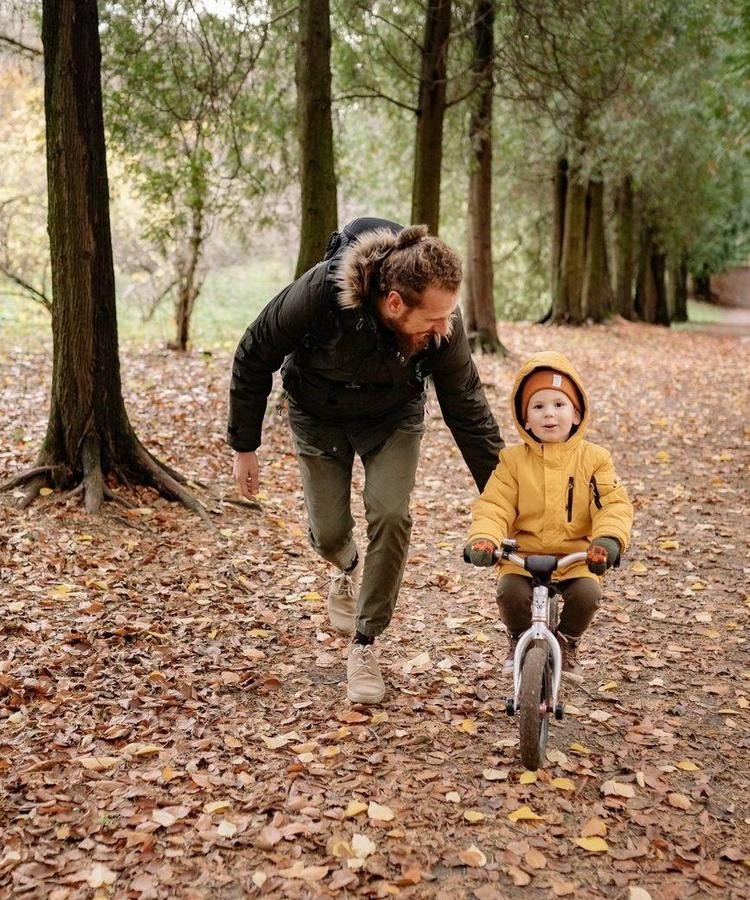
Life inevitably presents obstacles. Children who receive genuine encouragement learn to bounce back from setbacks rather than being paralyzed by them. When their struggle is acknowledged and their effort praised, they internalize the message that perseverance is a strength. “I know that was tough, but you didn’t give up, and look what you achieved!” Such statements teach children that challenges are surmountable with sustained effort, building crucial emotional intelligence in children and the grit needed for long-term success.
Boosting Motivation and Engagement
Extrinsic rewards like praise can sometimes diminish intrinsic motivation. Encouragement, however, ignites a child’s internal drive. When children are encouraged for their genuine interest, curiosity, and effort in a task, they develop a love for learning for its own sake. This intrinsic motivation leads to deeper engagement, greater creativity, and a more fulfilling learning experience, fostering positive child behavior organically. They participate because they want to, not because they expect a reward or fear disapproval.
Strengthening Parent-Child Relationships
Encouragement fosters a secure and loving bond between parents and children. When children feel truly seen and understood – their efforts appreciated, their struggles validated – they develop trust and open communication with their caregivers. This strengthens the foundation of the relationship, making children more receptive to guidance and more likely to share their thoughts and feelings. It’s a key component of effective parenting techniques.


Practical Ways to Encourage Your Child
Translating the philosophy of encouragement into daily interactions requires conscious effort and specific strategies. These parenting techniques are vital for cultivating a supportive environment.
Focus on Effort, Not Just Results
This is perhaps the cornerstone of effective encouragement. Instead of saying, “You got an A! You’re so smart!” try, “You put in so much effort studying for that test, and it really paid off!” Or, if a child struggles, “I saw how carefully you tried each step on that drawing. What did you learn from this attempt?” This teaches children that effort is commendable, regardless of the immediate outcome. It also makes them more willing to tackle difficult tasks.
Be Specific and Sincere
Vague praise like “Good job!” offers little value. Encouragement should be specific, highlighting exactly what the child did well or what effort they demonstrated. “I appreciate how you shared your toys with your friend without being asked” is far more impactful than “You’re a good kid.” Specificity shows you’re paying attention and helps the child understand which behaviors are valued. Sincerity is also key; children can detect insincerity, which undermines trust.
Empower Them to Solve Problems
Instead of immediately stepping in to fix a problem, encourage your child to think through solutions. Ask open-ended questions like, “What do you think might help here?” or “What are some different ways you could approach this?” Even if their initial ideas aren’t perfect, validating their problem-solving attempts (“That’s an interesting idea; let’s see how it works”) builds self-efficacy and critical thinking skills. This is a powerful positive parenting strategy.
Provide Opportunities for Success and Learning from Failure
Children need chances to succeed to build confidence, but they also need safe spaces to fail and learn. Encourage them to try new things, even if they’re challenging. When they succeed, acknowledge their effort. When they stumble, frame it as a learning opportunity: “It didn’t work out this time, but what did you learn that you can try differently next?” Help them analyze what went wrong without judgment, focusing on growth and persistence. This is crucial for developing resilience in children.
Create a Supportive Home Environment
An encouraging home environment is one where children feel safe to express themselves, make mistakes, and take risks without fear of harsh criticism or ridicule. This means:
* Active Listening: Truly hear what your child is saying and feeling.
* Empathy: Validate their emotions, even if you don’t agree with their actions.
* Clear Expectations: Set reasonable boundaries and expectations, explaining the ‘why’ behind them.
* Positive Communication: Use constructive language and avoid blame.
* Model Encouragement: Children learn by example. Encourage others in their presence and be kind to yourself.

Common Pitfalls: What to Avoid
Even with the best intentions, parents can fall into traps that dilute the power of encouragement. Recognizing these pitfalls is key to refining parenting techniques and ensuring effective child development strategies.
Empty Praise vs. Meaningful Encouragement
The biggest pitfall is confusing empty praise with meaningful encouragement. Over-praising everything, especially trivial efforts or outcomes, can lead to children seeking constant validation, becoming afraid of challenges, or developing a false sense of superiority. Children often see through insincere or generic praise, which can diminish its value and their trust. Remember to be specific, focus on effort, and genuinely mean what you say.
The Dangers of Comparison
Comparing a child to siblings, friends, or even their past self in a critical way (“Why can’t you be more like your brother?”) is incredibly damaging. It erodes self-esteem, fosters resentment, and teaches children that their worth is relative. Every child develops at their own pace and possesses unique strengths. Focus on their individual progress and growth, celebrating their unique journey. Encourage them to be the best version of *themselves*, not someone else. This is a foundational aspect of respectful parenting.


The Long-Term Ripple Effect: Encouragement into Adulthood
The profound impact of encouragement on child development doesn’t cease in childhood; it echoes throughout a person’s life, shaping their adult character, relationships, and professional trajectory. The seeds sown early on blossom into enduring qualities.
Lifelong Learners and Adaptable Individuals
Adults who were consistently encouraged as children tend to embrace lifelong learning. They view new challenges not as daunting obstacles, but as exciting opportunities for skill acquisition and personal growth. Their cultivated growth mindset makes them highly adaptable, capable of navigating change and uncertainty with resilience. They are more likely to pursue education, embrace new technologies, and remain intellectually curious, reflecting a sustained growth mindset for kids that transitioned into adulthood.
Emotionally Intelligent and Empathetic Adults
Encouragement fosters strong emotional intelligence in children by validating their feelings and teaching them to understand their own efforts and struggles. As adults, they are often more self-aware, better equipped to manage their emotions, and more empathetic towards others. They can offer constructive feedback, build healthy relationships, and contribute positively to their communities because they understand the value of acknowledging effort and supporting growth in others. They become encouraging individuals themselves.
Conclusion: Empowering Children for a Brighter Future
The journey of child development is a complex tapestry woven with countless interactions, experiences, and messages. Among these, encouragement stands out as a vibrant, strengthening thread that fundamentally shapes the fabric of a child’s being. It is the language that communicates intrinsic worth, nurtures resilience, ignites a passion for learning, and builds authentic self-esteem.
Moving beyond superficial praise, the conscious choice to offer meaningful encouragement — focusing on effort, specific actions, and perseverance — empowers children to believe in their capabilities, embrace challenges, and view mistakes as stepping stones to growth. This practice not only strengthens the critical parent-child bond but also lays the groundwork for adults who are adaptable, emotionally intelligent, and lifelong learners.
Let us commit to fostering environments where every child feels seen, valued, and encouraged to explore their full potential. By consistently nurturing their inner drive and celebrating their journey, we equip them with the most powerful tools for a future brimming with possibility. The impact of encouragement on children is truly profound, a gift that keeps giving, shaping not just individual lives, but the very fabric of society. Embrace the power of encouragement today and watch your child — and indeed, the world — thrive.

—
Frequently Asked Questions
01
What is the core difference between praise and encouragement?
▼
02
How does encouragement help a child’s self-esteem?
▼
03
Can encouragement help my child develop a growth mindset?
▼
04
What are some practical ways to encourage my child daily?
▼
05
Why is it important to avoid comparing my child to others?
▼
06
Does encouragement help with emotional intelligence in children?
▼
07
What should I do if my child seems dependent on praise?
▼
08
How does encouragement foster resilience?
▼
09
Are there any long-term benefits of encouragement that extend into adulthood?
▼
010
Is there a point where a child can receive too much encouragement?
▼
Recommended Reading
-
Understanding Growth Mindset: A Parent’s Guide** (Deeper dive into growth mindset concepts and activities)
→
-
Building Emotional Intelligence in Children: Practical Strategies** (Focus on SEL, empathy, and emotional regulation)
→
-
Positive Discipline: Guiding Your Child with Love and Logic** (Explores non-punitive parenting approaches)
→
-
Fostering Resilience: Helping Kids Bounce Back from Setbacks** (Detailed strategies for developing grit and coping skills)
→
-
The Art of Active Listening: Connecting with Your Child** (Explores communication techniques for stronger bonds)
→
-
Beyond ‘Good Job’: How to Give Effective Feedback to Kids** (Focuses on specific, effort-based feedback)
→
-
Developing Child Self-Esteem: Activities and Approaches** (Practical games and interactions to boost confidence)
→
-
Navigating Sibling Rivalry: Promoting Cooperation and Respect** (Addresses common family dynamics related to comparison)
→
-
Play-Based Learning: Unleashing Creativity and Problem-Solving** (Connects play to fostering effort and exploration)
→
-
Early Childhood Development Stages: What Parents Need to Know** (Provides context for age-appropriate encouragement)
→
SOURCES Verified External Citations
- American Academy of Pediatrics (AAP): For child development, well-being, and parenting guidelines.
- Centers for Disease Control and Prevention (CDC): Developmental milestones and positive parenting tips.
- Child Mind Institute: Expert resources on children’s mental health and development.
- Positive Psychology Institute / Martin Seligman’s work: For concepts related to growth mindset, resilience, and well-being.
- Stanford University’s Carol Dweck’s Research on Growth Mindset: The foundational work on fixed vs. growth mindsets.
- ZERO TO THREE: Focus on early child development and foundational relationships.
- National Association for the Education of Young Children (NAEYC): Best practices in early childhood education.
- Praise typically focuses on the outcome or a child’s inherent trait (“You’re so smart!”). Encouragement, however, focuses on effort, process, and perseverance (“I saw how hard you worked on that!”), fostering intrinsic motivation and resilience.
- Encouragement builds genuine self-esteem by teaching children that their worth comes from their effort, persistence, and choices, not just their achievements. This internal validation makes their confidence more robust and less dependent on external approval.
- Absolutely. By consistently highlighting effort and learning from mistakes rather than innate talent, encouragement directly cultivates a growth mindset, where children believe their abilities can be developed through dedication.
- Focus on specific efforts (“You really thought through that problem!”), acknowledge their struggles, empower them to problem-solve, and create a supportive environment where mistakes are seen as learning opportunities.
- Comparison can severely damage a child’s self-esteem, foster resentment, and make them feel their worth is conditional. Each child is unique; focus on their individual progress and celebrate their personal journey.
- Yes, by validating a child’s efforts and helping them understand their reactions to challenges, encouragement supports the development of self-awareness, emotional regulation, and empathy—key components of emotional intelligence.
- Gradually shift from outcome-based praise to effort-based encouragement. Instead of “That’s perfect!”, try “You took your time with that, and it shows.” This helps them internalize motivation and self-assessment.
- When children are encouraged through setbacks, they learn that challenges are surmountable. They develop the mindset that perseverance leads to progress, building their ability to recover and adapt after difficulties.
- Yes, encouraged children often grow into adults who are lifelong learners, adaptable, self-motivated, and possess higher emotional intelligence, contributing positively to relationships and their careers.
- The quality of encouragement matters more than the quantity. Insincere or generic encouragement (empty praise) can be counterproductive. Meaningful, specific, and effort-focused encouragement is always beneficial and not something a child can get “too much” of.