


How to Raise Kind and Compassionate Children
In a world often defined by its rapid changes and complex challenges, equipping our children with kindness and compassion isn’t just an admirable goal—it’s an urgent necessity. Parents today face the unique task of preparing their children not just for academic success, but for a life rich in meaningful connections and ethical engagement. This essential guide delves into the profound importance of nurturing empathy, offering practical, experience-backed strategies to help your child develop a deep understanding and care for others.
From understanding the very building blocks of empathy to navigating common developmental hurdles, this comprehensive resource will empower you to create a home environment where kindness thrives, emotional intelligence blossoms, and compassion becomes a lifelong virtue. Let’s embark on this rewarding journey together, shaping not just individuals, but architects of a more humane future.
Unpacking Kindness, Compassion, and Empathy in Child Development
Before we can effectively nurture these vital traits, it’s crucial to understand what they truly mean and how they manifest at different stages of a child’s growth.
Defining the Core Concepts: More Than Just “Being Nice”
While often used interchangeably, kindness, compassion, and empathy are distinct yet deeply interconnected concepts:
* Kindness: At its heart, kindness is about benevolent actions—being friendly, generous, and considerate. It’s the outward expression of good intentions. A child offering to share their toy or helping a fallen friend demonstrates kindness.
* Compassion: This goes a step further than kindness. Compassion involves recognizing the suffering of others and feeling a deep desire to alleviate it. It’s empathy in action, coupled with a genuine motivation to help. A child who not only understands their friend’s sadness but actively seeks to comfort them shows compassion.
* Empathy: This is the foundation upon which both kindness and compassion are built. Empathy is the ability to understand and share the feelings of another. It comes in two main forms:
* Cognitive Empathy: The intellectual capacity to understand another person’s perspective or feelings (“I understand *what* you’re feeling”).
* Affective (or Emotional) Empathy: The ability to experience and share the emotions of another (“I feel *with* you”).
Nurturing empathy in kids means cultivating both the capacity to understand and the inclination to feel with others, which naturally leads to acts of kindness and compassion.
The Developmental Journey of Empathy in Kids (Ages & Stages)
Empathy isn’t something children either have or don’t; it develops over time, much like any other cognitive or social skill. Understanding these stages can help parents set realistic expectations and tailor their teaching methods.
* Infancy (0-1 year): Even at this early stage, infants show precursors to empathy through emotional contagion, crying when another baby cries. They are deeply attuned to their caregivers’ emotions. Early attachment and responsive parenting are critical for laying a secure foundation.
* Toddlerhood (1-3 years): While often characterized by egocentrism (“mine!”), toddlers begin to show nascent perspective-taking. They might offer a pacifier to a crying friend, even if it’s their own comfort item. This period is crucial for developing a “Theory of Mind”—the understanding that others have different thoughts and feelings.
* Preschool (3-5 years): Children start to understand basic emotions and can identify them in others. They can engage in simple sharing and cooperative play. Role-playing and imaginative games become powerful tools for exploring different viewpoints.
* School Age (5-12 years): As cognitive abilities advance, children develop deeper perspective-taking skills. They can understand more complex emotional scenarios and the nuances of social situations. This is a prime time for moral reasoning, where discussions about fairness, justice, and the impact of actions become very important.
* Adolescence (12+ years): Teenagers develop the capacity for abstract empathy, extending their concern beyond immediate circles to broader societal issues like poverty or climate change. Their developing sense of identity often intertwines with their values, leading to a desire for social contribution.
The Profound Benefits of Nurturing Empathy in Children
Raising empathetic kids isn’t just about making them “good”; it’s about equipping them with essential life skills that benefit them, their families, and society as a whole.
* For the Child: Empathetic children tend to have stronger, more meaningful friendships and relationships. They possess better emotional regulation skills, leading to greater resilience in the face of adversity. Studies show that children with high emotional intelligence experience less aggression and anxiety and often enjoy improved academic outcomes. Their enhanced self-awareness and understanding of others contribute to better mental well-being throughout life.
* For Society: A society built on empathy is one that is more inclusive, just, and peaceful. Empathetic individuals are less likely to engage in bullying, more likely to volunteer, and better equipped to collaborate and solve complex problems. They are the future leaders and citizens who will drive positive change.
Common Misconceptions About Empathy and Kindness
It’s important to dispel myths that can hinder our efforts:
* “Empathy makes you weak.” On the contrary, empathy is a strength. It requires emotional intelligence, courage to connect, and resilience to navigate difficult feelings without being overwhelmed.
* “Kids are just born that way.” While some children may have a natural predisposition, empathy is primarily a learned and nurtured skill. Consistent effort from parents and caregivers is key.
Laying the Groundwork: Cultivating a Compassionate Home Environment
The home is the first and most powerful classroom for emotional development. The daily interactions, values, and communication styles within your family lay the essential groundwork for kindness and compassion.
Modeling Kindness and Compassion: Be the Living Example
Children are keen observers, and parents are their first and most influential teachers. What you do speaks far louder than what you say.
* Demonstrate Empathy in Daily Interactions: Show empathy towards your spouse, other family members, friends, and even strangers. When you see someone struggling, voice your concern and discuss how you might help. “That person looks sad; I wonder what happened? Maybe we could offer them a smile.”
* Acknowledge Your Own Mistakes and Show Self-Compassion: No one is perfect. When you make a mistake, apologize sincerely and explain the impact of your actions. Model self-compassion by acknowledging your own feelings without judgment. This teaches children that it’s okay to be imperfect and that empathy starts within.
* Discuss Media with an Empathetic Lens: When watching TV or reading books, ask questions about characters’ feelings and motivations. “Why do you think that character is angry? How might they be feeling right now?”
Cultivating Emotional Literacy: The Language of Feelings
Understanding one’s own emotions is a prerequisite for understanding others’. Helping children name, understand, and manage their feelings is a cornerstone of emotional intelligence.
* Teach Children to Identify and Name Their Own Emotions: Create an environment where all feelings are accepted. Use simple, direct language: “I see you’re frustrated that your tower fell,” or “You seem really joyful playing with that toy.”
* Validate Feelings: Instead of dismissing a child’s sadness or anger, validate it. “It’s okay to feel angry when your toy breaks.” Validation doesn’t mean condoning negative behavior, but acknowledging the underlying emotion.
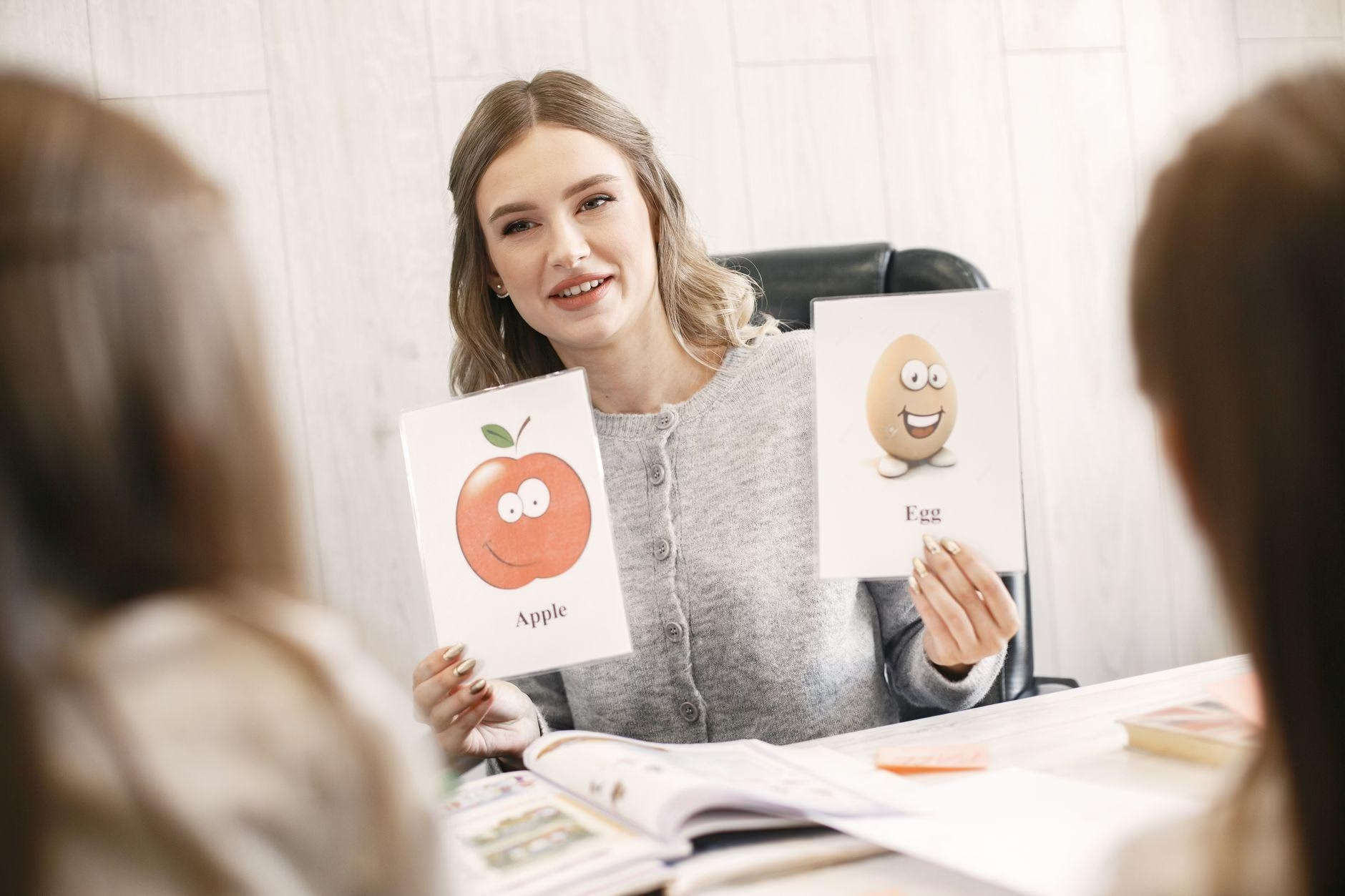
* Build an Emotional Vocabulary: Introduce a wide range of feeling words—beyond just “happy,” “sad,” “mad.” Use words like “disappointed,” “anxious,” “proud,” “calm,” “overwhelmed.” Visual aids like emotion cards can be helpful for younger children.


Explicitly Defining Family Values: Kindness, Respect, and Responsibility
Your family’s core values act as a moral compass. Make kindness, respect, and responsibility central to your family’s identity.
* Family Meetings and Discussions: Regularly discuss what these values look like in action. What does respect mean in our home? How can we show kindness to each other?
* Create a “Kindness Jar” or Similar Ritual: Encourage family members to write down acts of kindness they’ve done or observed, and share them regularly. This highlights and celebrates prosocial behavior.
* Teach Gratitude and Appreciation: Regularly practice gratitude, whether through a gratitude journal, a family gratitude ritual at dinner, or simply encouraging children to thank others sincerely.
The Power of Intentional Communication: Active Listening and Open Dialogue
Effective communication fosters understanding and connection, crucial for empathy.
* Practice Active Listening with Children: When your child speaks, put down distractions, make eye contact, and truly listen. Reflect back what you hear: “So, you’re saying you’re upset because your brother took your block without asking?” This models empathetic listening.
* Encourage Open Dialogue: Create a safe space where children feel comfortable expressing their thoughts, fears, and joys without judgment. Ask open-ended questions that encourage reflection rather than yes/no answers.
* Family Conflict Resolution: Teach children how to resolve conflicts peacefully by focusing on understanding each other’s perspectives and finding mutually agreeable solutions.
Practical Strategies for Actively Teaching Empathy and Prosocial Behavior
Beyond creating a supportive environment, actively teaching empathy requires specific strategies and consistent practice.
Encourage Perspective-Taking: “Stepping into Someone Else’s Shoes”
This is perhaps the most direct way to build cognitive empathy.
* Use Hypothetical Scenarios: “How would you feel if someone did that to you?” or “Imagine you were the new kid in school; what would that feel like?”
* Discuss Characters in Books, Movies, and Real-Life: Whenever a character in a story or a person in real life experiences strong emotions, pause to discuss. “Why do you think the wolf was so sad? What might he need?”
* Role-Playing: Engage in imaginative play where children take on different roles, especially those different from their own experiences. This can be particularly effective for younger children.
Promote Helping Behaviors and Service: From Chores to Community
Empathy deepens through action. Giving children opportunities to contribute fosters a sense of purpose and connection.
* Age-Appropriate Chores: Frame chores not as punishments, but as contributions to the family unit. “We all live here, and we all help make our home a nice place.”
* Small Acts of Kindness: Encourage simple acts like helping a younger sibling, offering a hand to a parent, or sharing a snack with a friend. These micro-moments build a habit of helpfulness.
* Community Service Opportunities: As children get older, involve them in volunteer work. Visiting a nursing home, participating in a park clean-up, or collecting food for a local shelter can profoundly broaden their perspective and sense of connection to the wider world. Even choosing toys to donate can be a learning experience.


Teaching Effective Problem-Solving and Peaceful Conflict Resolution
Conflicts are inevitable, but they offer powerful opportunities to practice empathy and prosocial skills.
* Guide Children to Find Fair Solutions: Instead of always stepping in to solve disputes, guide children to brainstorm solutions together. “What could each of you do to make this better?”
* Mediating Sibling Disputes with an Emphasis on Understanding: Help siblings express their feelings and listen to each other. “I hear you’re upset because your brother broke your drawing. And I hear you, [brother], that it was an accident. How can we fix this?”
* The “I-Message” Technique: Teach children to express their needs and feelings without blame: “I feel [emotion] when [action] because [reason], and I wish [desired outcome].”
Broadening Horizons: Exposure to Diverse Experiences and Cultures
Exposure to different ways of life helps children understand that their experience is not the only one.
* Reading Diverse Books and Watching Age-Appropriate Media: Seek out stories featuring characters from various backgrounds, cultures, and abilities. Discuss their unique perspectives and challenges.
* Connecting with People from Different Backgrounds: Seek opportunities for your child to interact with people of different ages, cultures, or socio-economic statuses. This could be through school, community events, or simply welcoming diverse friends into your home.
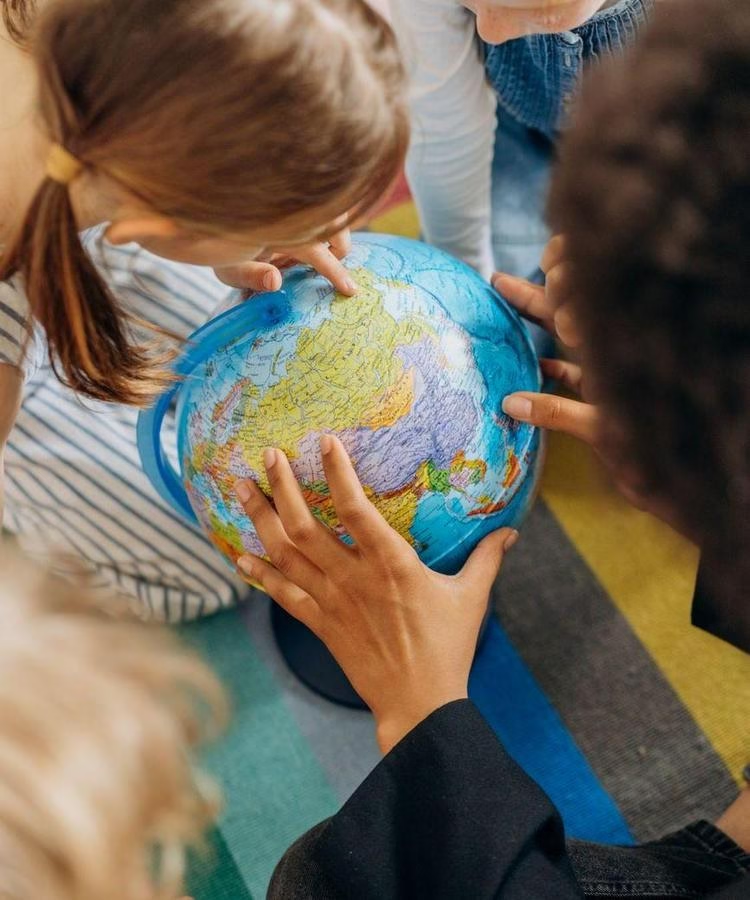
* Travel and Cultural Exploration: If possible, travel exposes children to new customs and ways of thinking. Even local cultural festivals or museums can offer valuable insights.
Leveraging Storytelling, Books, and Media for Empathy Building
Stories are powerful vehicles for emotional learning.
* Choose Books with Strong Emotional Narratives: Books about feelings, friendship, overcoming challenges, or helping others are excellent. Discuss the characters’ feelings, motivations, and the impact of their actions.
* Critical Media Literacy: Help children analyze what they consume. Discuss how different characters are portrayed, if stereotypes are present, and the potential impact of certain messages.
Fostering Mindfulness and Self-Compassion in Children
Before we can effectively care for others, we must first be able to tune into ourselves.
* Simple Mindfulness Exercises: Teach children basic breathing exercises or body scans to help them become aware of their own emotions and physical sensations. This self-awareness is a precursor to social awareness.
* Teaching Self-Forgiveness: Help children understand that everyone makes mistakes and that self-compassion is about treating themselves with the same kindness they would offer a friend.
Navigating Challenges: When Kindness and Empathy Seem to Lag
Even with the best intentions, parents will inevitably face situations where a child’s empathy seems to be missing. These moments are opportunities for direct teaching and guidance.
Addressing Bullying and Meanness: Intervention and Education
Whether your child is the perpetrator or the victim, these situations demand thoughtful, empathetic intervention.
* For the Perpetrator: Help your child understand the *impact* of their actions on others. Use restorative justice principles: “What happened? How did it make them feel? What can you do to make it right?” Teach alternative, prosocial ways to handle frustration or get needs met.
* For the Victim: Empower your child to advocate for themselves, seek help from trusted adults, and understand that the bullying is not their fault.
* Bystander Intervention: Teach children the power of being an upstander—someone who speaks up or gets help when they see unkindness happening.
Managing Sibling Rivalry with an Empathy-Focused Approach
Sibling squabbles are normal, but they offer fertile ground for cultivating empathy.
* Avoid Comparisons: Comparing siblings only breeds resentment. Focus on each child’s individual strengths and contributions.
* Facilitate Understanding of Each Other’s Needs: Help siblings articulate what they want and need, and then guide them to listen to their sibling’s perspective. “Your brother wants to play with that toy now, and you want it. How can we both get what we want?”
* Set Clear Boundaries and Consequences: While understanding is key, unkind or aggressive behavior still requires clear boundaries and logical consequences that teach responsibility.
Dealing with Selfishness and Entitlement: Shifting Focus to Others
In a consumer-driven society, combating selfishness and entitlement is a common parental challenge.
* Teach Delayed Gratification: Help children understand that they can’t always have what they want immediately.
* Emphasize Shared Resources and Contribution: Frame family life as a collective effort where everyone contributes and shares.
* Gentle Correction and Explaining Impact: When a child acts selfishly, gently explain the impact of their actions on others. “When you take all the cookies, your sister doesn’t get any, and that makes her sad.”
The Role of Positive Discipline: Teaching, Not Just Punishing
Discipline should be about teaching, not just imposing consequences.
* Consequences That Teach Empathy: Instead of just a time-out, a consequence might involve making amends. If a child damages something, they help fix it. If they hurt feelings, they write an apology or do an act of kindness.
* Focus on Natural and Logical Consequences: These are consequences directly related to the misbehavior. If a child leaves their toys out and they get lost, the logical consequence is not having them to play with.
* Building Inner Discipline: The goal is to help children internalize moral values, not just comply out of fear of punishment. This fosters true empathy and self-regulation.
Sustaining Compassion: Fostering Lifelong Empathy
Raising kind and compassionate children isn’t a destination, but an ongoing journey. The skills nurtured in childhood can evolve into lifelong virtues.
Encouraging Continued Service and Community Contribution
As children grow, their capacity for impact grows too.
* Finding Causes They Care About: Encourage teenagers to explore issues they are passionate about, whether it’s environmentalism, animal welfare, or social justice. Support their efforts to contribute.
* Making Civic Engagement a Family Tradition: Continue to participate in family volunteer activities or discuss current events with an eye toward how individuals can make a difference.
Celebrating and Acknowledging Acts of Kindness (Beyond Rewards)
Positive reinforcement is crucial, but focus on the intrinsic value of kindness.

* Focus on Intrinsic Motivation: Praise the effort and the feeling behind the act: “You were so thoughtful to share your snack; that made your friend feel so happy!” rather than just “Good job!”
* Specific, Descriptive Praise: Highlight the specific empathetic action. “I noticed you helped your brother tie his shoe without him even asking. That was a really kind thing to do.”
* Creating a “Kindness Wall”: A physical space where family members can post notes about kind acts they’ve observed can be a powerful visual reminder.
The Profound Link Between Empathy, Resilience, and Mental Well-being
Understanding others is inextricably linked to understanding oneself and navigating the complexities of life.
* How Understanding Others Builds Self-Understanding: When children practice empathy, they learn about the vast spectrum of human experience, which helps them normalize their own feelings and challenges.
* Empathy as a Protective Factor: Empathetic individuals are better equipped to build strong social support networks, reducing feelings of isolation and stress. They can better manage conflicts and bounce back from setbacks.
* Discussing the “Helper’s High”: Research shows that helping others releases endorphins, promoting feelings of well-being. Encourage children to notice how good it feels to make a positive difference.
Conclusion: The Rewarding Journey of Raising Empathetic Children
Raising kind and compassionate children is undoubtedly one of the most vital, albeit challenging, endeavors of parenthood. It requires patience, consistency, self-awareness, and a willingness to learn alongside your child. We’ve explored that this journey is built upon understanding the nuances of empathy, creating a nurturing home environment, actively teaching prosocial strategies, and wisely navigating developmental hurdles.
By modeling kindness, fostering emotional literacy, promoting perspective-taking, and celebrating acts of service, you are not just raising a child; you are cultivating an individual who possesses the tools to forge deep connections, contribute meaningfully to their communities, and navigate life with a strong moral compass. Empathy is not merely a soft skill; it is a fundamental human capacity that unlocks personal well-being and collective flourishing.
The journey of nurturing empathy in children is a profound gift—a gift not only to them, but to your family and, ultimately, to the world. Start today, one small act of kindness, one empathetic conversation, one understanding embrace at a time. The future of our world rests not just on intelligence, but on the depth of our collective compassion.
—
FAQ Section
1. At what age can children start to develop empathy?
Empathy begins to develop in infancy through emotional contagion and responsive caregiving, with more explicit perspective-taking skills emerging in toddlerhood and preschool years.
2. Is empathy something children are born with, or can it be taught?
While some innate predispositions exist, empathy is largely a learned and nurtured skill that develops through consistent modeling, teaching, and practice.
3. What are the most effective ways to teach empathy to a preschooler?
For preschoolers, focus on role-playing, discussing characters’ feelings in books, using simple hypothetical scenarios (“How would you feel?”), and encouraging sharing and cooperative play.
4. How can I encourage my child to show kindness to siblings?
Avoid comparisons, facilitate active listening between siblings, teach problem-solving skills to resolve conflicts, and set clear expectations for respectful interactions.
5. What should I do if my child is being unkind or selfish?
Address the behavior directly by explaining its impact on others, guide them towards understanding the other person’s feelings, and implement logical consequences that teach empathy and responsibility.
6. How does emotional literacy contribute to empathy?
Emotional literacy—the ability to identify, understand, and express one’s own feelings—is a fundamental building block for empathy, as it allows a child to recognize and relate to the emotions of others.
7. Can technology hinder or help a child’s empathy development?
Technology can hinder if excessive screen time limits real-world social interaction. However, it can help when used mindfully to access diverse stories, cultures, and educational content that promotes understanding and perspective-taking.
8. What is the difference between sympathy and empathy?
Sympathy is feeling sorrow or pity for someone’s misfortune, while empathy is the ability to understand and share the feelings of another, experiencing emotions *with* them.
9. How important is parental modeling in teaching empathy?
Parental modeling is profoundly important. Children learn by observing, so consistently demonstrating kindness, compassion, and empathy in your own interactions is crucial.
10. Are there specific books or resources for teaching empathy to children?
Yes, there are many excellent children’s books that address emotions and social situations. Look for titles that explore feelings, diverse characters, and conflict resolution, and discuss them with your child.
—
Recommended Reading
-
Positive Discipline Techniques for Toddlers
→
-
Developing Emotional Intelligence in Teenagers
→
-
The Ultimate Guide to Age-Appropriate Chores
→
-
How to Handle Sibling Rivalry Peacefully
→
-
Mindfulness Exercises for Busy Families
→
-
Building Resilience in Children: A Parent’s Guide
→
-
Teaching Kids About Different Cultures: Resources & Activities
→
-
Effective Communication Strategies for Parents
→
-
Understanding Child Development Milestones
→
-
Community Service Ideas for Kids and Families
→
SOURCES Verified External Citations
- American Academy of Pediatrics (AAP): For child development, mental health, and parenting guidance.
- UNICEF: For broader understanding of child well-being and development across cultures.
- Positive Discipline Association: For resources on positive parenting and constructive discipline.
- Yale Center for Emotional Intelligence: For research and resources on emotional literacy and SEL.
- Greater Good Science Center at UC Berkeley: For science-backed insights into prosocial behavior, gratitude, and compassion.
- The Child Mind Institute: For expert information on child psychology and emotional development.