


Unlock Calm & Connection: The Proven Benefits of Mindful Parenting for Happier Families
Discover the proven benefits of mindful parenting for reducing stress, strengthening parent-child bonds, nurturing emotional intelligence, and creating a harmonious home. Start your journey to calm and connection today.
Introduction: What is Mindful Parenting and Why It Matters Now More Than Ever
In the whirlwind of modern life, parenting often feels like a constant juggle of demands, deadlines, and digital distractions. The longing for genuine connection with our children, and for a calmer home, can feel increasingly out of reach. But what if there was a powerful, evidence-based approach that could transform daily chaos into moments of peace, foster deeper bonds, and equip our children with essential life skills? This is the promise of mindful parenting.
Defining Mindful Parenting: Presence, Awareness, and Intention
Mindful parenting is an intentional approach to raising children that emphasizes bringing a moment-to-moment, non-judgmental awareness to the parent-child relationship. It’s about being fully present with your children, truly listening, and responding thoughtfully rather than reacting impulsively. At its core, it embodies three key elements:
1. Presence: Being fully engaged in the current moment with your child, rather than being lost in thoughts of the past or future, or distracted by external stimuli.
2. Awareness: Noticing your child’s emotions, needs, and behaviors, as well as your own internal states (thoughts, feelings, physical sensations) without judgment.
3. Intention: Deliberately choosing how to respond based on your values, rather than falling back on old habits or knee-jerk reactions.
It’s not about being perfect, but about consistently striving to show up fully and compassionately for your children and yourself. It’s an ongoing journey of conscious parenting, building a foundation of positive parenting practices rooted in awareness.
Beyond Buzzwords: Core Principles and Practices
Mindful parenting draws heavily from the principles of mindfulness, a concept popularized by Jon Kabat-Zinn, adapting them to the unique dynamics of family life. It integrates practices like active listening, self-regulation, empathy, and non-judgment into everyday interactions, moving beyond mere theory to practical application.
The Modern Parenting Challenge: Overwhelm, Disconnection, and Digital Distractions
Today’s parents face unprecedented levels of stress. The pressure to be perfect, the constant comparison on social media, economic anxieties, and the pervasive presence of digital devices create an environment ripe for overwhelm and disconnection. Many parents find themselves physically present but mentally absent, leading to strained relationships and a sense of guilt. The quest for stress reduction for parents has become a critical concern.
The Urgency for a More Mindful Approach
Against this backdrop, mindful parenting offers a vital antidote. It provides tools to navigate the complexities of modern family life with greater ease and intention, shifting the focus from simply managing behavior to nurturing the whole child and fostering genuine family connection.
The Science Behind Mindful Parenting: A Glimpse into its Efficacy
Decades of research in neuroscience and psychology support the efficacy of mindfulness. Studies show that mindfulness can literally change the brain, improving executive functions like attention, emotional regulation, and self-awareness. When parents cultivate these qualities, they are better equipped to model them for their children, promoting healthy brain development and overall well-being.
How Brain Science Supports Mindful Approaches
Neuroscientific research, particularly from experts like Daniel Siegel, highlights how mindful practices strengthen neural pathways associated with calm and connection. For children, consistent exposure to mindful parenting fosters a secure attachment, which is foundational for their emotional and social development, leading to better emotional regulation in children.
—
Core Benefit 1: Cultivating Stronger Parent-Child Bonds Through Authentic Connection
At the heart of mindful parenting lies the profound ability to forge deeper, more meaningful connections with our children. When we are truly present, we create an environment where children feel seen, heard, and valued, strengthening the essential parent-child bond.
Enhanced Communication and Active Listening
Mindful parenting transforms communication from transactional exchanges into genuine dialogues. It encourages parents to put down distractions, make eye contact, and truly listen to what their children are saying, both verbally and non-verbally. This isn’t just about hearing words; it’s about understanding the emotions and intentions behind them.
Moving Beyond Distraction: Fully Present Listening
Imagine your child recounting their day, and instead of nodding absently while scrolling your phone, you pause, turn, and give them your full attention. This simple act sends a powerful message: “You are important to me.” This kind of mindful communication builds trust and openness.
Empathetic Responses vs. Reactive Judgments
When listening mindfully, parents learn to respond with empathy, seeking to understand rather than immediately judging or fixing. This validates a child’s feelings, making them feel safe to express themselves, even when those emotions are challenging.
Building Empathy and Understanding
A core aspect of mindful parenting is the practice of perspective-taking – making a conscious effort to see a situation from your child’s point of view. This cultivates profound empathy, allowing parents to respond to a child’s behavior not just as a problem, but as an expression of an underlying need or emotion.
Seeing the World Through Your Child’s Eyes
When a toddler throws a tantrum, a mindful parent might pause to consider the overwhelming sensory input or the frustration of unmet desires, rather than immediately labeling the child as “naughty.” This understanding informs a more compassionate and effective response.
Validating Emotions and Experiences
Mindful parents help children label and understand their feelings, teaching them that all emotions are valid, even if certain behaviors are not acceptable. This fundamental teaching prevents children from suppressing emotions, fostering emotional literacy.
Creating a Secure Attachment: A Foundation for Life
Consistent, responsive mindful parenting is a cornerstone for developing a secure attachment between parent and child. A secure attachment provides a safe base from which a child can explore the world, knowing they have a reliable caregiver to return to.
Responsiveness and Emotional Availability
Mindful parents are emotionally available and respond sensitively to their children’s cues, creating a sense of safety and predictability. This isn’t about perfect parenting, but about consistent effort to connect and repair ruptures when they occur.
The Long-Term Impact on Child Development
Children with secure attachments tend to have higher self-esteem, better social skills, greater emotional resilience, and stronger academic performance later in life. Mindful parenting lays this crucial groundwork, influencing a child’s entire trajectory.
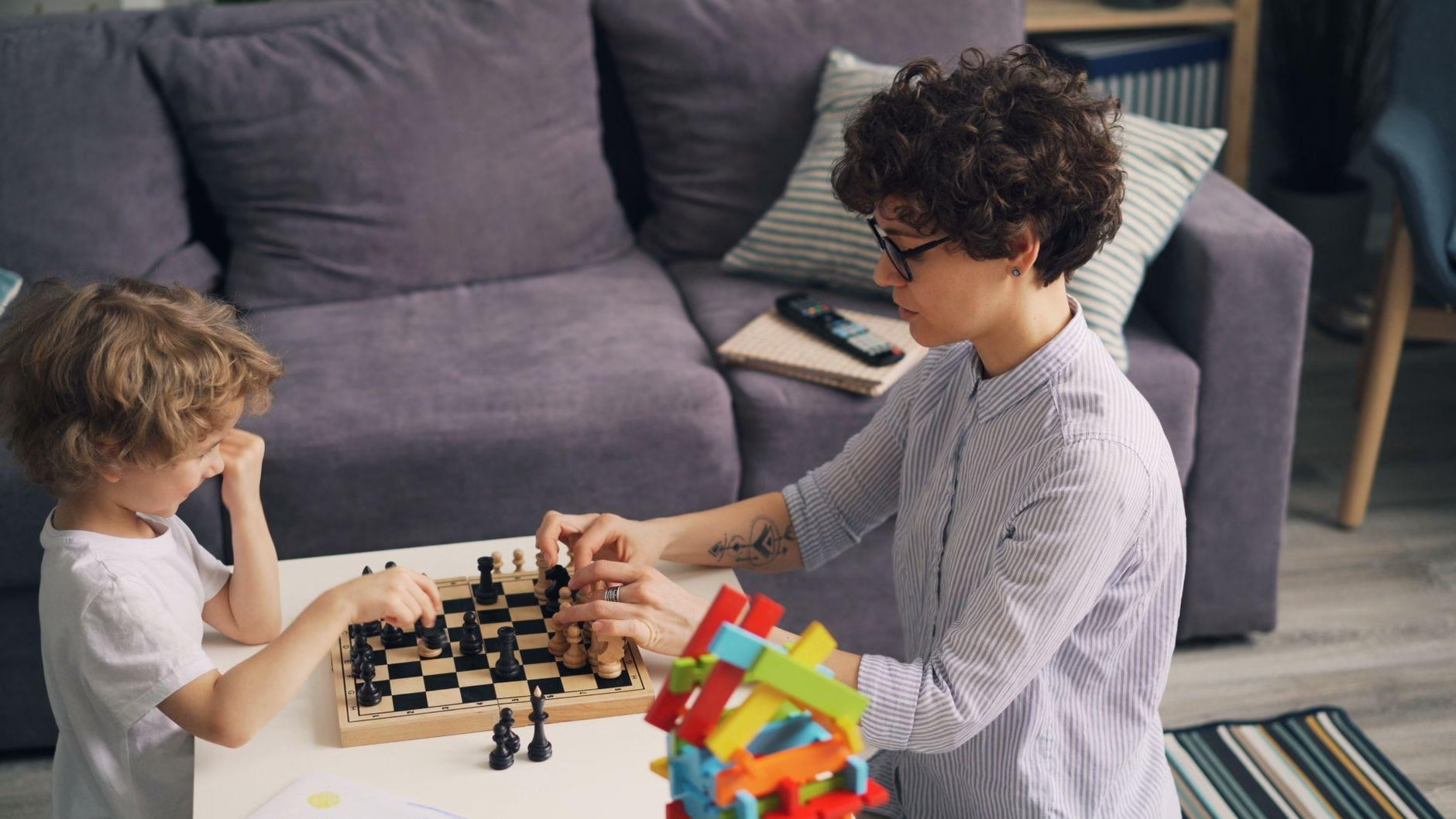
Core Benefit 2: Reducing Stress and Overwhelm for Parents (and the Entire Family)
One of the most immediate and tangible benefits of mindful parenting is the profound reduction in parental stress. By equipping parents with tools for self-awareness and regulation, it transforms their internal landscape, which in turn calms the entire household.
Mindfulness as a Tool for Parental Self-Regulation
Parenting is inherently stressful, often triggering our own unresolved issues and emotional reactivity. Mindful parenting teaches parents to observe their own thoughts and feelings without getting swept away by them. This “pause” button allows for a conscious choice in response.
Managing Triggers and Emotional Reactivity
When a child pushes boundaries, it’s easy for a parent to react with anger or frustration. Mindfulness helps identify these triggers, allowing parents to take a breath, acknowledge their own emotional state, and choose a more measured, effective response.
The Power of the Pause
Before reacting, mindful parents learn to pause. This brief moment creates space for wisdom and compassion to emerge, leading to more intentional and less regretted interactions. This is a critical aspect of mindful parenting techniques.
Finding Peace Amidst Chaos: Real-World Applications
Mindfulness isn’t just for quiet meditation; it’s a practice for real-life, messy parenting. It helps parents find pockets of calm even in the most tumultuous moments, whether it’s a screaming toddler or a rebellious teenager.
From Daily Hassles to Major Life Transitions
Whether it’s the morning rush, homework battles, or navigating significant family changes, mindful awareness helps parents stay grounded. It’s about accepting that chaos exists, but choosing not to be consumed by it.
Practicing Self-Compassion in Imperfect Moments
Mindful parenting acknowledges that parents are human and will make mistakes. It encourages self-compassion, helping parents learn from setbacks without dwelling on guilt, and to offer themselves the same kindness they offer their children.


The Ripple Effect: Calmer Parent, Calmer Home, Happier Family
A parent’s emotional state profoundly impacts the family environment. When parents are more regulated, present, and calm, this energy permeates the home, creating a more peaceful and harmonious atmosphere for everyone.
Modeling Emotional Well-being
Children learn by observing. When they see a parent calmly manage stress or respond thoughtfully to a difficult situation, they internalize these strategies, building their own capacity for emotional intelligence.
Creating a Positive Family Atmosphere
A calmer parent leads to fewer arguments, less shouting, and more moments of joy and connection. This cultivates a positive feedback loop, where each family member contributes to a more supportive and loving environment.
Core Benefit 3: Nurturing Emotional Intelligence and Resilience in Children
Beyond immediate benefits, mindful parenting invests in a child’s long-term well-being, fostering crucial emotional intelligence and resilience that serve them throughout life. This is a vital outcome of conscious parenting.
Teaching Emotional Awareness and Regulation
Mindful parents actively teach children to identify, understand, and manage their emotions. This goes beyond simply telling a child to “calm down” and instead provides concrete tools and language.
Naming and Understanding Feelings
Mindful parents help children put words to their feelings (“I see you’re feeling frustrated right now because your tower fell down”). This validation is the first step toward emotional regulation in children.
Developing Healthy Coping Strategies
Children learn to pause and use simple mindfulness techniques, like deep breaths or counting, to regulate intense emotions. They learn to choose constructive responses instead of destructive outbursts.
Fostering Resilience and Adaptability
Life is full of challenges. Mindful parenting equips children with the internal resources to navigate setbacks, adapt to change, and bounce back from adversity with strength and confidence.
Navigating Setbacks with Grace
By modeling acceptance and a growth mindset, mindful parents teach children that mistakes are opportunities for learning, not failures. This builds internal fortitude.
Building Inner Strength and Problem-Solving Skills
Mindful children are encouraged to reflect on problems and brainstorm solutions, rather than being given all the answers. This fosters a sense of agency and competence.
Developing Compassion and Kindness Towards Self and Others
Mindful parenting emphasizes empathy, extending it not just to others but also to oneself. Children learn the importance of kindness, forgiveness, and understanding.
The Role of Empathy in Social Development
Children raised with a mindful lens are more attuned to the feelings of others, leading to better friendships, reduced bullying, and a stronger sense of community.
Moving Beyond Self-Centeredness
Mindfulness encourages children to consider the impact of their actions on others, fostering a broader sense of connection and responsibility within their social circles.
Core Benefit 4: Creating a More Peaceful and Harmonious Home Environment
The collective impact of reduced parental stress, stronger bonds, and emotionally intelligent children culminates in a home environment marked by greater peace, harmony, and mutual respect.
Reducing Conflict and Power Struggles

Many household conflicts stem from a lack of understanding or miscommunication. Mindful parenting helps diffuse these situations by fostering active listening, empathy, and a focus on underlying needs rather than surface-level arguments.
Shifting from Control to Collaboration
Instead of asserting power, mindful parents engage in collaborative problem-solving, inviting children to be part of finding solutions. This empowers children and reduces resistance.
Understanding Underlying Needs
When a child is being “difficult,” a mindful parent looks beyond the behavior to ask, “What is the need being expressed here?” This approach often uncovers unmet needs for attention, control, or understanding, allowing for a more effective resolution.
Encouraging Cooperation and Respect
Mindful homes are built on mutual respect. Children are treated as capable individuals whose perspectives matter, fostering a willingness to cooperate and contribute positively to family life.
Family Meetings and Shared Decision-Making
Regular family meetings provide a platform for open communication, where everyone has a voice, and decisions are made together. This builds a sense of belonging and shared responsibility.
Valuing Each Family Member’s Voice
From what to have for dinner to how to resolve a sibling squabble, mindful parents genuinely consider their children’s input, teaching them that their opinions are valued and respected.
Mindful Discipline vs. Punishment: Guiding with Intention
Mindful discipline is a cornerstone of positive parenting. It moves away from punitive measures towards teaching, guidance, and understanding, with the goal of fostering self-discipline and responsibility.
Consequences that Teach, Not Punish
Mindful discipline focuses on natural and logical consequences that help children learn from their mistakes, rather than simply imposing pain or fear. The emphasis is on reparation and learning.
Repairing Ruptures and Moving Forward
When conflicts arise or mistakes are made, mindful parents prioritize repairing the relationship. This involves acknowledging hurt, apologizing, and working together to find a way forward, reinforcing trust and connection.
Practical Steps: How to Start Your Mindful Parenting Journey Today
The good news is that integrating mindful parenting doesn’t require a complete overhaul of your life. Even small, consistent practices can yield significant results.
Mindfulness Practices for Busy Parents (Even 5 Minutes Can Help!)
You don’t need hours of meditation. Short, intentional moments of mindfulness can profoundly impact your day.
Mindful Breathing and Body Scans
Take a few deep breaths throughout the day. Notice the sensations in your body without judgment. Even 60 seconds can reset your nervous system. Mindful parenting techniques often start here.
Walking Meditation and Sensory Awareness
When walking, truly notice your surroundings: the feel of the ground, the sounds, the sights. Bring this same awareness to chores like washing dishes or folding laundry.


Integrating Mindfulness into Daily Routines
Mindfulness isn’t just a formal practice; it’s a way of being that can be woven into the fabric of family life.
Mindful Eating and Mealtime Presence
Encourage everyone to savor their food, noticing tastes, textures, and smells. Engage in conversation without screens, fostering connection.
Mindful Playtime and Engaging with Curiosity
When playing with your child, be fully present. Let go of your agenda and follow their lead with genuine curiosity. Notice their joy, their focus.
Mindful Transitions (e.g., getting ready, bedtime)
Transitions can be tough. Introduce mindfulness by announcing them, taking a few deep breaths together, or using a calming activity like singing a song to smooth the shift.
Mindful Communication Strategies for Families
The way we speak and listen to our children is paramount.
“STOP” Practice (Stop, Take a breath, Observe, Proceed)
A quick, on-the-spot tool for parents and children to regulate emotions before reacting impulsively.
Using “I” Statements and Non-Violent Communication Principles
Express your own feelings and needs (“I feel frustrated when…”) rather than blaming (“You always…”). This fosters understanding and reduces defensiveness.
Family Check-ins and Gratitude Practices
Dedicate time each day or week for family members to share their highs and lows, and express gratitude. This builds connection and emotional literacy.
Overcoming Common Challenges in Mindful Parenting: Real-World Solutions
The journey of mindful parenting is not linear. There will be bumps, detours, and moments when you feel anything but mindful. This is entirely normal.

Patience and Self-Compassion: It’s a Journey, Not a Destination
Perfection is an illusion. Mindful parenting is about progress, not perfection. Embrace the learning curve.
Letting Go of Perfectionism
Understand that you don’t have to be a perfect parent to be a mindful one. Aim for “good enough” and focus on consistent effort.
Treating Yourself with the Same Kindness You Offer Your Child
When you stumble, offer yourself understanding rather than harsh self-criticism. This models healthy self-talk for your children.
Dealing with Setbacks and Imperfect Moments
Every parent makes mistakes. The mindful approach isn’t about avoiding them, but learning how to navigate and repair them.
Learning from Mistakes and Repairing Connections
When you react in a way you regret, acknowledge it to your child, apologize, and commit to trying differently next time. This teaches invaluable lessons about accountability and repair.
The Power of a Do-Over
Sometimes, simply saying “Can we have a do-over?” can reset a challenging interaction and teach children about second chances and forgiveness.
Seeking Support and Community
You don’t have to navigate this journey alone. Connection with others can be a powerful resource.
Connecting with Like-Minded Parents
Join parenting groups, online forums, or workshops focused on mindful or conscious parenting to share experiences and gain insights.
Resources for Continued Growth (Books, Courses, Therapy)
Explore books by experts like Dr. Shefali Tsabary or Tina Payne Bryson, consider online courses, or seek support from a therapist if challenges feel overwhelming.
Conclusion: Embrace the Power of Presence for a Fulfilling Family Life
Mindful parenting is more than just a technique; it’s a transformative lifestyle choice that profoundly benefits both parents and children. By cultivating presence, awareness, and intention, you can unlock a deeper sense of calm within yourself and foster authentic connection within your family. The proven benefits—from stronger parent-child bonds and reduced parental stress to emotionally intelligent children and a more harmonious home—are not just aspirational ideals, but attainable realities.
A Call to Action: Start Small, Stay Consistent, Witness the Transformation
Begin today, even with just five minutes of mindful breathing or a single mindful interaction with your child. Embrace the journey with self-compassion, knowing that every moment of presence is a gift you give to your family. The seeds of mindfulness you plant now will blossom into a lifetime of happier, more connected family relationships.
Recapping the Journey to Calm & Connection
Remember, mindful parenting is about being present, not perfect. It’s about building a foundation of love, respect, and understanding that will serve your family for generations to come. Step into this transformative practice and unlock calm & connection: the proven benefits of mindful parenting for happier families await you.
—
Frequently Asked Questions
01
What exactly is mindful parenting?
▼
02
How does mindful parenting benefit parents?
▼
03
Can mindful parenting really strengthen the parent-child bond?
▼
04
Is mindful parenting effective for children’s emotional development?
▼
05
What are some simple mindful parenting techniques I can try?
▼
06
How does mindful discipline differ from traditional punishment?
▼
07
Is mindful parenting only for young children, or can it help with teenagers too?
▼
08
What if I’m not naturally a ‘calm’ person? Can I still be a mindful parent?
▼
09
How long does it take to see results from mindful parenting?
▼
010
Where can I find resources to learn more about mindful parenting?
▼
Recommended Reading
-
How to Teach Emotional Intelligence to Your Kids
→
-
Effective Stress Reduction Techniques for Busy Parents
→
-
Building Stronger Family Bonds: A Guide to Positive Communication
→
-
Understanding Secure Attachment: Why It Matters for Child Development
→
-
Gentle Discipline: Alternatives to Punishment that Actually Work
→
-
Mindfulness for Beginners: Simple Practices to Start Today
→
-
Navigating Screen Time: Mindful Approaches to Digital Devices in Families
→
-
The Power of Self-Compassion for Parents
→
-
Beyond Anger: Helping Your Child Regulate Big Emotions
→
-
Creating a Calm Home: Design Tips and Routine Ideas
→
SOURCES Verified External Citations
- Greater Good Science Center (University of California, Berkeley): Known for research and articles on mindfulness, compassion, and well-being, including parenting.
- American Psychological Association (APA): For general psychological principles, child development, and stress management research.
- Mindful.org: A leading resource for mindfulness practice, research, and applications in daily life, often featuring articles on mindful parenting.
- National Institute of Mental Health (NIMH): For information on child mental health, emotional regulation, and stress.
- Child Mind Institute: Provides expert information on children’s mental health and learning disorders, including advice on emotional regulation and resilience.
- Dr. Daniel Siegel’s websites/books: (e.g., *The Whole-Brain Child*, *No-Drama Discipline*) for insights into neuroparenting and mindful approaches to child development.
- Mindful parenting is an approach to raising children rooted in bringing present-moment awareness, intention, and non-judgment to your interactions. It involves being fully present, observing your own and your child’s emotions, and choosing to respond thoughtfully rather than reacting impulsively.
- Mindful parenting significantly reduces parental stress and overwhelm by teaching self-regulation, fostering self-compassion, and enabling parents to respond calmly amidst chaos. This leads to a calmer parent and, consequently, a calmer home environment.
- Yes, by emphasizing active listening, empathy, and genuine presence, mindful parenting helps cultivate a deeper, more authentic connection. Children feel truly seen and understood, which builds trust and a secure attachment.
- Absolutely. Mindful parenting nurtures children’s emotional intelligence by teaching them emotional awareness, regulation, and healthy coping strategies. It also fosters resilience, adaptability, compassion, and kindness.
- Start with short practices like mindful breathing (even 1-2 minutes), practicing active listening during conversations, or bringing full attention to a daily routine like mindful eating or playing with your child. The “STOP” practice (Stop, Take a breath, Observe, Proceed) is also highly effective for immediate situations.
- Mindful discipline focuses on guiding children with intention and teaching valuable life lessons through natural or logical consequences, rather than imposing fear or pain. It prioritizes repairing ruptures in the relationship and fostering self-responsibility.
- Mindful parenting principles are beneficial for all ages. For teenagers, it can enhance communication, foster mutual respect, help navigate complex emotions, and support their development of autonomy and problem-solving skills, strengthening the parent-teen bond.
- Yes! Mindful parenting is a practice, not an inherent trait. It’s about cultivating awareness and intention, regardless of your baseline personality. The journey includes learning self-compassion for your own imperfections and emotional states.
- While some immediate shifts in interactions can be felt quickly, the deeper, transformative benefits of mindful parenting unfold gradually over time with consistent practice. It’s a lifelong journey of growth and connection.
- Numerous books (e.g., *The Whole-Brain Child*, *Mindful Parenting* by Kristen Race), online courses, workshops, and reputable websites like Mindful.org or the Greater Good Science Center offer valuable insights and practical tools for your mindful parenting journey.